




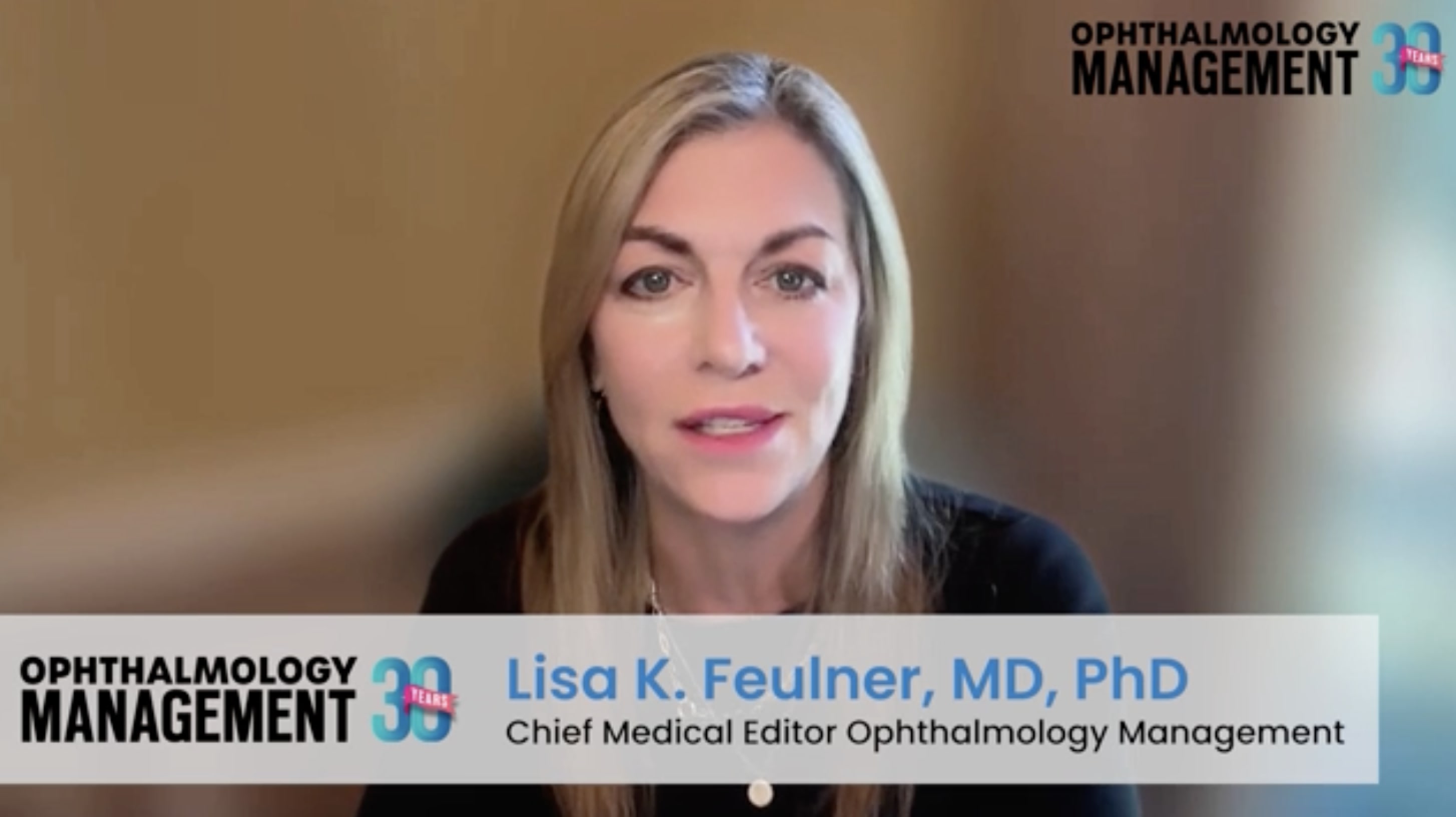
Over the last 30 years, since the launch of Ophthalmology Management, ophthalmology has undergone a remarkable technological transformation. “What makes this evolution so exciting is that every innovation has directly translated into better outcomes and better quality of life for our patients,” says Lisa K. Feulner, MD, PhD, chief medical editor of Ophthalmology Management. “When many of us began training, cataract surgery involved larger incisions, longer recovery times, and outcomes focused primarily on restoring functional vision. Today, we're performing highly precise refractive cataract surgery through microincisions using advanced phaco technology, image guidance, femtosecond lasers, and sophisticated intraocular lenses (IOLs) that not only provide patients with excellent distance vision, but also intermediate and near vision.”
Access everything from Ophthalmology Management’s 30th anniversary celebration of innovation.
Another area that has advanced just as dramatically, notes Dr. Feulner, is diagnostics, with the development of optical coherence tomography (OCT) fundamentally changing how ophthalmologists diagnose and manage retinal disease and glaucoma. Further, in glaucoma, there has been a move from a world dominated by drops and traditional filtering surgery to one that now includes minimally invasive glaucoma surgery (MIGS) procedures with improved safety profiles and earlier intervention opportunities. In retina, anti-VEGF therapy has changed the trajectory of diseases that once led to inevitable vision loss into conditions that many patients can successfully manage for years.
Finally, she says, ophthalmology is entering another exciting era driven by artificial intelligence (AI), digital integration, and personalized medicine.
“I believe the future holds even greater possibilities than we can currently imagine,” Dr. Feulner concludes.
To help commemorate Ophthalmology Management’s 30th anniversary, 4 other ophthalmology leaders shared their perspectives on innovation in retina, glaucoma, and cataract and refractive surgery.
Retina: Imaging, Anti-VEGF, and Gene Therapy
The introduction of OCT and anti-VEGF transformed how ophthalmologists diagnose and treat retinal disease. But the innovation came from being able to treat patients using a combination of OCT and anti-VEGF, says Priya S. Vakharia, MD, of Retina Vitreous Associates of Florida.

“Not only did we have the ability to image the retina, but we also had therapies that could change the appearance of the retina, and then we could assess the response using OCT,” she explains. “They were really developed almost at an opportune time together because we could couple structure with treatment and modify disease in real-time.”
Prior to anti-VEGF injections, treatment options for retinal diseases—age-related macular degeneration, proliferative diabetic retinopathy, and diabetic macular edema—were largely limited to laser surgery.
“My colleagues who are older will say that before the injections came out, their jobs were totally different,” relays Dr. Vakharia. “The introduction of anti-VEGF totally changed the workflow of the retina clinic.”
Another area that has generated enormous excitement is gene therapy. In terms of where it realistically fits within the next decade of retinal care, Dr. Vakharia notes that it will depend on results from current clinical trials and how efficacious those therapies are. “I think that it has the potential to be the next disruptor in our field, but it all really boils down to what the trial results show. Additionally, real world experience is key and cost-to-benefit ratio is important—all of these factors will determine whether it's a major disruptor or just another treatment option.”
Dr. Vakharia adds that both gene therapy and tyrosine kinase inhibitors are current innovations that have potential. “This is the first time we're talking about treatments that may be quite a bit longer in duration, and I think that has the potential to be the next major inflection point.”
Dr. Vakharia is also looking forward to better therapies for geographic atrophy. “That would be an even bigger disruptor and inflection point if we had really effective therapies for geographic atrophy. I think that would be really meaningful.”
Finally, she says, the next advancement that might impact ophthalmology is AI. “I think it's going to change our field, not just in terms of note-taking and report-generating, but also in terms of diagnostic management.”
Cataract Becomes Refractive
Over the past 30 years, cataract surgery has evolved from a rehabilitative procedure into a refractive procedure. “Thirty years ago, cataract surgery was primarily about restoring sight. We were grateful if the patient saw better with glasses and healed safely. Restoring reading range in combination with quality distance vision while preserving binocularity and stereopsis was mostly unheard of,” recalls Vance Thompson, MD, founder of Vance Thompson Vision. “Today, cataract surgery is one of the most powerful refractive procedures we perform. We are not just removing a cloudy lens; we are designing a visual future.”
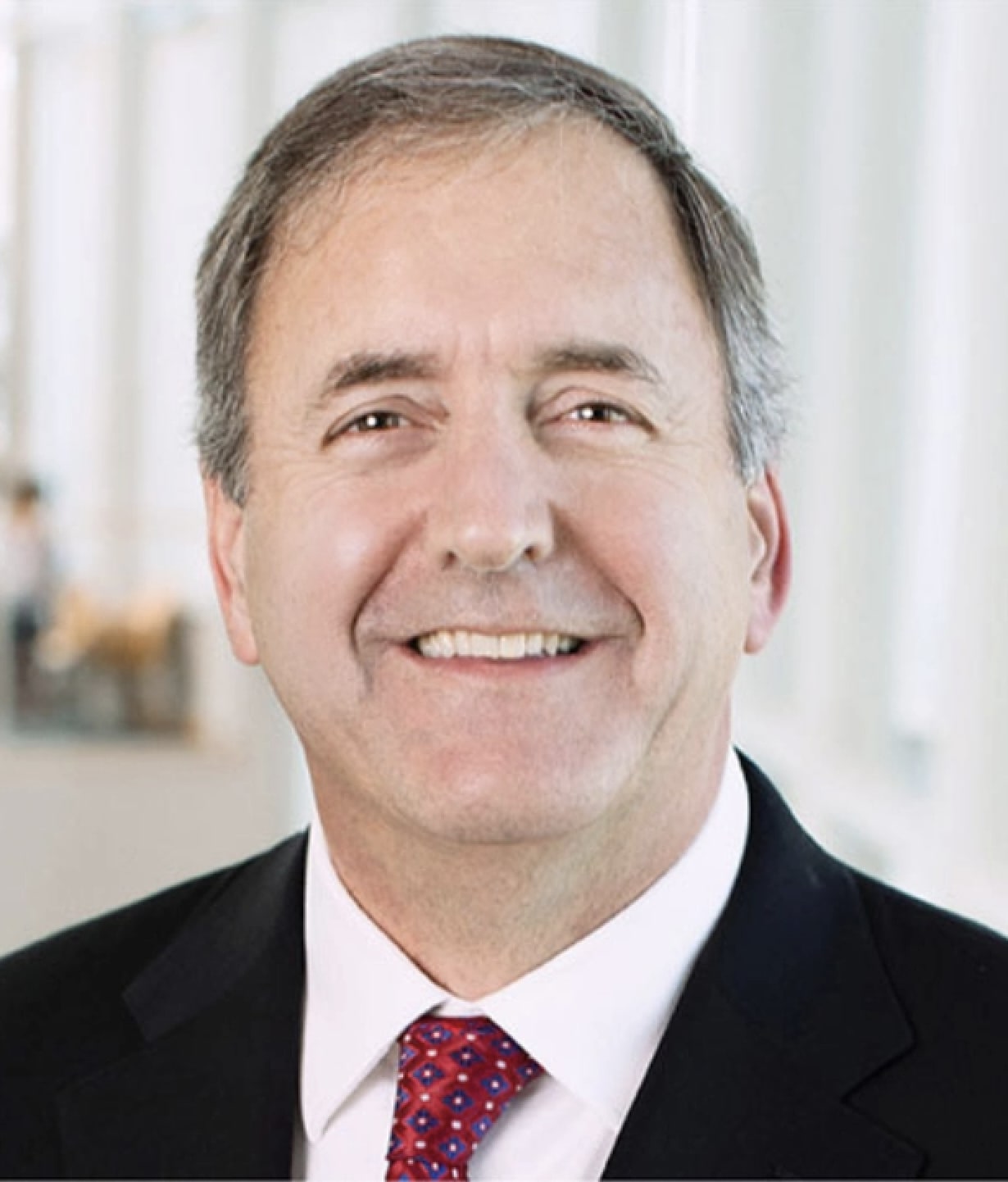
Dr. Thompson continues, “And since our world has evolved to much more near activity with computer and mobile phone use, it is no surprise that our happiest patients have full range quality vision for driving, computer, and mobile phone use. I liken it to the LASIK age group. The happiest patients are plano or very close to it with quality distance vision coupled with a full functioning lens to help them see intermediate and near on demand. It is not different with our presbyopes and cataract patients...the happiest patients have an implant that provides full range vision and minimal to no residual refractive error.”
LASIK
Dr. Thompson says if he had to choose one innovation that had the greatest impact on surgical precision and outcomes, it would be LASIK.
“There is simply no way to bring a patient joy without hitting the refractive endpoint at precise plano/zero correction or as close as possible,” he explains. “Unaddressed residual refractive error is something we treat after traditional cataract surgery with glasses fine-tuned as precise as possible to distance perfection, and we need to do the same with advanced cataract surgery where patients are expecting to see crisp without glasses. But rather than glasses, we use LASIK to take the football in for the touchdown and take the advanced implant patient to plano or as close to it as possible.”
Dr. Thompson continues, “Ray-tracing LASIK has made the most accurate procedure in refractive surgery even more accurate, now that it incorporates what we always wished we could incorporate in treatment planning: refraction, keratometry, wavefront, anterior corneal curvature, posterior corneal curvature, pachymetry, anterior-chamber depth, axial length, iris registration, and cyclotorsion control. Without LASIK, all refractive surgery would not be where it is today, and that includes treating advanced implant cataract surgery residual refractive error. As a matter of fact, refractive surgeons have used LASIK to treat patients not fully happy with PRK, SMILE, phakic IOL, or pseudophakic IOL. LASIK is the most accurate surgical procedure there is and is so helpful to help meet or exceed the patient’s desire for no to minimal refractive error.”
Dr. Thompson adds that although optical biometry combined with modern IOL formulas has improved refractive accuracy, ophthalmologists still need to take care of residual refractive error due to healing-related variables, such as effective lens position (which, he notes, still involves a preoperative estimate).
“Advanced optics IOLs truly, along with precise measurements and better calculations, changed what was possible including giving that patient 20/20 uncorrected distance and the reading range of someone in their 30’s,” he explains. “But no matter how advanced the optic you cannot deliver a refractive outcome without refractive accuracy, and that is where LASIK saves so many situations and brings patients ultimate joy.”
The other major innovation, he says, is the understanding that the tear film is the first refracting surface of the eye: “A great formula with bad measurements from an unhealthy ocular surface is still a bad plan. But what we also know is that the tear film—what I like to call the tear lens—is the most powerful focusing element of our eye and for premium vision we need a premium tear lens along with a clear natural lens or a quality new lens implant.”
Premium IOLs and Astigmatism Management
Dr. Thompson says premium IOLs and astigmatism management have changed expectations the most. “Patients no longer think only about having the cataract removed. They think about reading, driving, computer work, golf, nighttime vision, independence from glasses, and quality of life,” he explains. “The expectation shifted from ‘make me better’ to ‘help me see the way I want to live.’ We are literally experiencing a revolution in our practice with the joy of restoring both functions our natural lens provided in a patient’s younger years: reading range and clarity.
Dr. Thompson adds that when patients understand that a standard monofocal implant restores clarity but gives them the reading range of an 80-year-old for the rest of their life, they truly want to hear about advanced implants that give them the reading range of their younger years when they didn’t need readers or bifocals, for the rest of their life and still see 20/20 uncorrected distance. “That is a powerful value proposition to our patients who either have lost near to presbyopia or lost both distance and near due to cataracts,” he explains. “Advanced implants that restore clarity and reading range in the cataract population have the presbyopes saying ‘I only need readers (or bifocals) and I am not going to wait decades for a cataract surgery that may not even happen.… I am going to do lens replacement now to restore my reading range and be less dependent on glasses.’ This is why advanced implants are the center of a growing revolution in cataract surgery and why refractive lens exchange is growing so significantly.”
Some innovations that Dr. Thompson hopes to see in the next 10 years include better full-range IOLs with fewer unwanted visual symptoms, more adjustable or modifiable lens technologies, better ways to measure and treat the ocular surface before surgery, more precise astigmatism management, smarter diagnostics, and AI tools that help match the right technology to the right patient. “I also hope innovation makes refractive cataract surgery more understandable for patients and more accessible for practices. And of course, the next 10 years will be amazing for AI and robotic cataract surgery,” he says.
Dr. Thompson concludes, “It has been such a joy to have been involved in the research and development of a lot of these technologies and it has helped me see first-hand what great innovators with industry support can do to help mankind and further our profession. My past experience gives me butterflies of excitement thinking of what is coming in the near future to help patients with dry eye, refractive error, or cataracts.”
MIGS and Modern Glaucoma Management
One glaucoma innovation that initially generated the early enthusiasm but ultimately failed to fully meet expectations in real-world practice is ab externo canaloplasty, recalls Zarmeena Vendal, MD, founder and medical director of Westlake Eye Specialists in Texas. “I remember ab externo canaloplasty as being one of our first steps toward less invasive surgery 15 years ago. It was promising to think of a way to access the canal and help the eye return to physiologic drainage. The learning curve was just so steep that the procedure was never adopted widely. But it carved the way for surgeons to start adopting less invasive surgical techniques as our next steps.”

Minimally Invasive Glaucoma Surgery
MIGS fundamentally changed the philosophy of glaucoma intervention compared with the treatment paradigm of the 1990s. “MIGS improved the safety of glaucoma surgery to match efficacy, so doctors who previously struggled with offering glaucoma surgery earlier now had a powerful toolbox to be more proactive,” says Dr. Vendal. “We could offer an intervention that would create a reduction in diurnal variation and reduce the patient’s burden, sooner rather than later, instead of being dependent on drop therapy. As a result, we were able to move the interventional glaucoma needle.”
Selective Laser Trabeculoplasty
Selective laser trabeculoplasty (SLT) played a role in reshaping how ophthalmologists think about medication burden and earlier intervention. “SLT helped us take the burden of treatment off the patient’s shoulders. We were able to battle issues of noncompliance and adherence, which are our biggest struggles during the patient’s glaucoma journey,” says Dr. Vendal. “In addition to that, we curbed diurnal variation effectively. All of these reasons made SLT a win-win.”
Sustained Drug Delivery Platforms
Sustained drug delivery platforms are changing the balance between procedures, pharmaceuticals, and patient adherence. “Sustained drug delivery is a powerful step after SLT in my opinion to really conquer diurnal variation and reduce the patient’s burden in their management of glaucoma,” explains Dr. Vendal. “It appears to be one of the safest ways to deliver glaucoma therapy to the point that surgeons of various levels of training, years of practice, can treat glaucoma irrespective of whether they’re specifically fellowship trained or not. When we think of battling glaucoma as a community, this type of intervention can really make a difference. Referring providers, patients, and surgeons alike can really get behind drug delivery and also move the interventional glaucoma needle.”
Dr. Vendal concluded, “We are very lucky to practice at a time when our toolbox is safe, effective, and easily adoptable. With all of these modalities, we owe it to our patients to be more proactive and interventional in their care. The more glaucoma practices aspire to become as dropless as possible, the better control patients will have of their glaucoma and ultimately change the trajectory of their disease.”
AI and Digital Tools
“One of the early successful applications of AI in ophthalmology was IOL lens calculation, then generative AI was introduced, and the modalities just kept getting better,” recalls Eric Rosenberg, DO, MSE, who practices at SightMD and is the cofounder of the Digital Ophthalmic Society and the cofounder of MetaMed Media. “We realized that we could use these for repetitious tasks like operating phone lines, prior authorizations, and we are starting to see it move into the office front desk, scribing, and other implementations. While the future is augmentation, I think we're still far enough away from it taking over our jobs.”
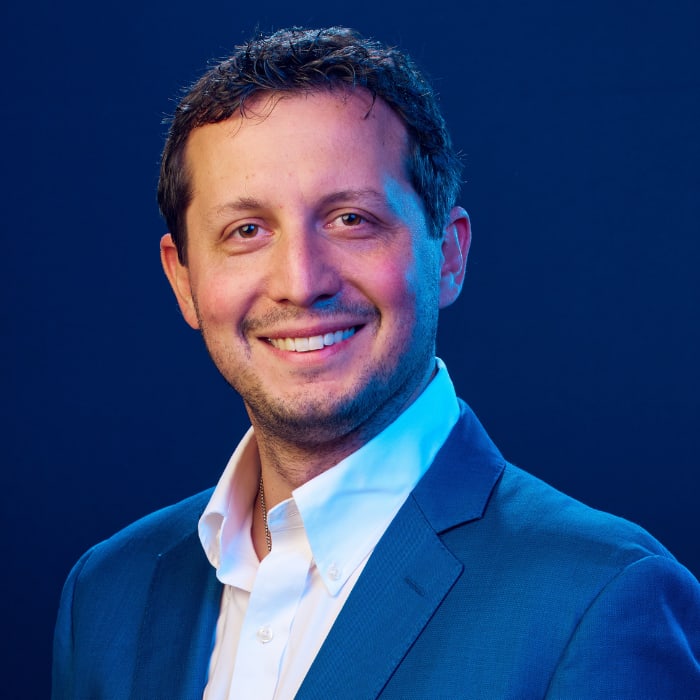
In October 2025, Dr. Rosenberg became the first surgeon to successfully perform cataract surgery using the Apple Vision Pro, powered by ScopeXR, a mixed-reality surgical platform codeveloped by Dr. Rosenberg. The platform allows surgeons to view the operative field in immersive stereoscopic 3D while simultaneously accessing real-time surgical overlays and comprehensive preoperative diagnostic data, all without breaking sterile technique. Since then, Dr. Rosenberg and his team have performed hundreds of additional cases using the platform.
The technology gives the operating surgeon the ability to video call any surgeon from anywhere in the world into the OR to see exactly what it is that the operating surgeon is seeing in true stereoscopic 3D. “If they have the Apple Vision Pro, they can navigate with Apple's AI avatar, walk around the OR, and they can annotate on the screen," said Dr. Rosenberg. "For example, if you're doing a MIGS surgery, they can help orient you with how you're putting the device into your trabecular meshwork. It truly gives the other operator a real view of what you're seeing while you're doing it, and to me, that just blew the walls off the OR. Ophthalmology used to be a solo sport; now I think of it more as a team sport. While all surgeons should be prepared for anything, and be aptly trained, there are times for all of us where we get into the weeds, and I think it's helpful for us to always be able to phone a friend.”
In the next decade, Dr. Rosenberg says he would like to see technologies that address the shortage of ophthalmologists. “It's no surprise to any of us that there's a shortfall in the number of ophthalmologists that we're putting out in training, as opposed to the population, which keeps expanding,” he says. “I would love to see technologies that help augment what it is that we do and that don’t replace the clinical thinking behind what we do.”
Dr. Rosenberg adds that this need can be met either by training people to fill that gap—leveraging nurse practitioners, physician assistants, and optometrists—or leaning on technology to be more efficient, wiser, and agile in treatment modalities and approaches.
“What I'm really excited for is robotics. With the AI learning and Segment Anything Models that are being developed, we're not far off from using robotics to help us in routine cataract surgery,” he concludes. “Also, just like IOLs and phaco coming onto the scene for the first time, now we're talking about AI coming into medicine for the first time. I think it's an exciting time to be alive and to be an ophthalmologist.” OM