





Oculis Holding AG announced new translational biomarker data from the phase 2 ACUITY trial of privosegtor in patients with optic neuritis (ON). According to a company press release, increases in plasma neurofilament light chain (NfL) and plasma glial fibrillary acidic protein (GFAP) levels were reduced with privosegtor vs placebo, particularly at early time points close to acute ON onset.
Together with previously observed improvements in low-contrast visual acuity with 18-letter gains at month 3 vs steroid alone, and preserved retinal structure, these findings provide convergent evidence across visual functional, retinal, and serum-based markers, further supporting the evaluation of privosegtor as a potential neuroprotective therapy, the company said in the press release.
The phase 2 ACUITY biomarker analysis evaluated neurodegenerative markers in the blood to quantify structural neuroaxonal preservation and glial modulation following an acute episode of ON:
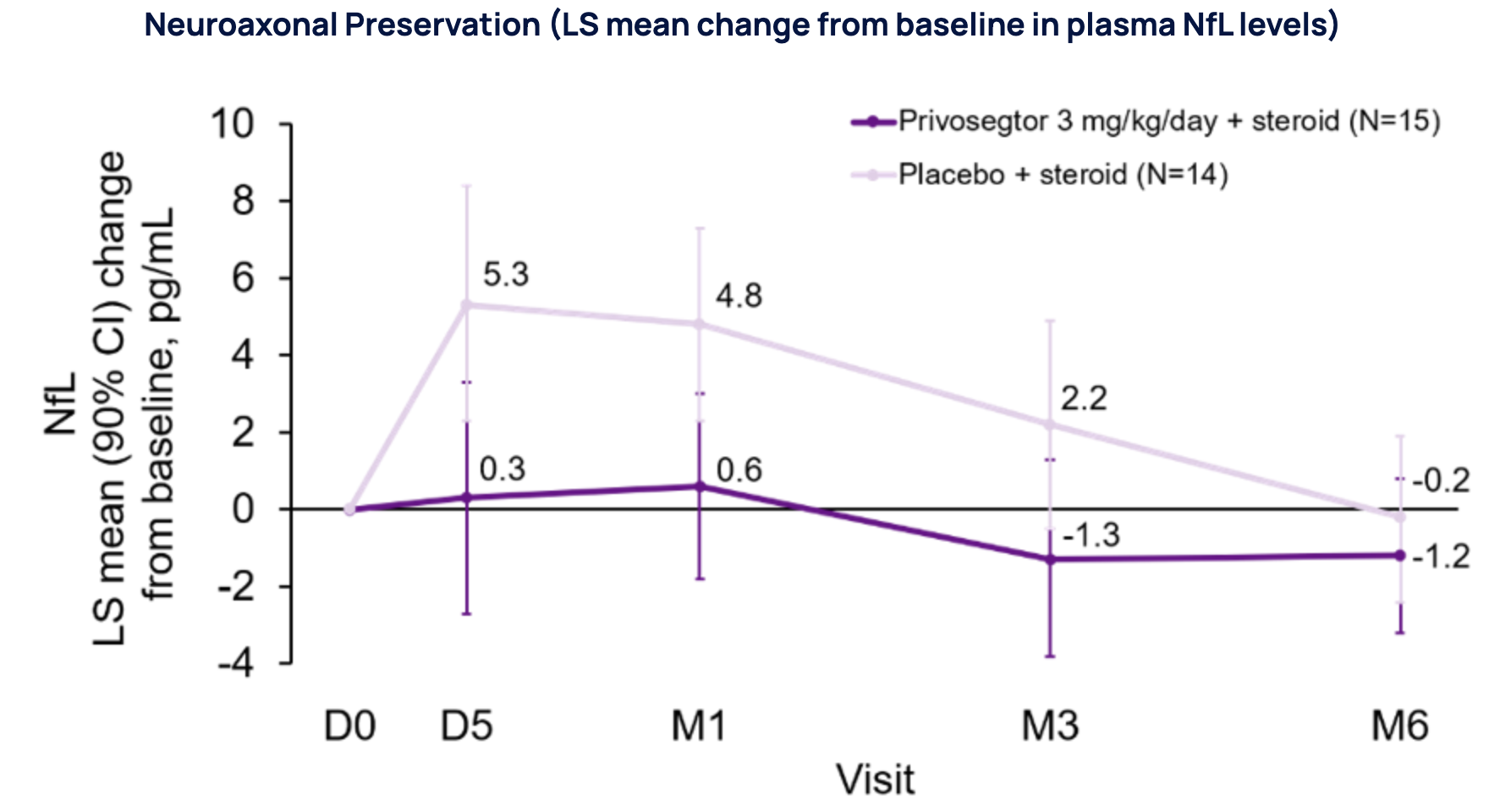
At day 5, the mean increase in plasma NfL was higher in the placebo group than in the privosegtor group. NfL levels remained stable in the privosegtor group through month 6, whereas levels in the placebo group remained elevated above baseline at month 1 before returning to baseline by month 6. Lower NfL levels are consistent with reduced structural neuroaxonal injury along the optic nerve pathway.
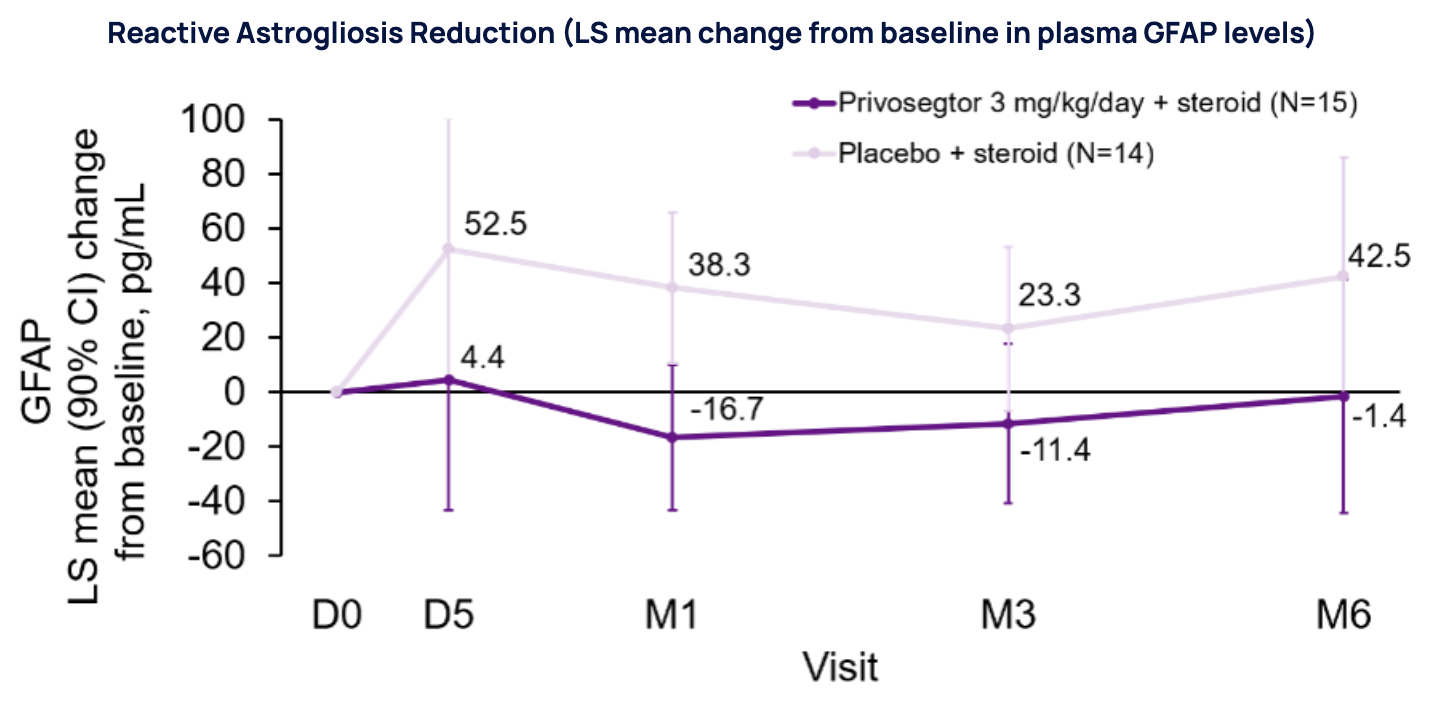
At day 5, the mean increase in plasma GFAP was greater in the placebo group than in the privosegtor group. GFAP levels remained elevated above baseline in the placebo group from month 1 through month 6, whereas they remained below baseline in the privosegtor group over the same period. Lower plasma GFAP levels are consistent with reduced acute reactive astrocytic inflammation and reduction of the secondary neurodegenerative cascade, the company said in the press release.