






For some eyecare providers, a social media presence may still feel peripheral—something nice to have, but not essential to clinical care or practice growth. My experience has been quite the opposite. I’ve found that when used with intention, social media can act as an extension of patient education, both introducing and reinforcing the conversations we have during consultations.
Over the past year, as I transitioned from a decade in academic medicine into private practice at Kelly Vision in New York City, our team has leaned into digital communication. The goal was never to “go viral” or chase trends. Instead, we focused on creating clear, accurate, patient-centered educational content that reflects how refractive decisions are made in our practice. The result has been meaningful engagement, stronger patient understanding, and measurable practice growth.
An Extension of Education
Patients often encounter refractive surgery content for the first time on Instagram, TikTok, or YouTube, rather than through a primary care referral or an ophthalmic practice website. In that sense, social media has become a new front door to the practice.
The key to effective social media use is tailoring the content to the platform. TikTok favors short, approachable, often playful clips. LinkedIn calls for a more professional and clinical tone. Instagram lives somewhere in between. This platform-specific mindset allows the same educational message to be delivered in multiple formats without diluting its substance.
Humanizing the Physician
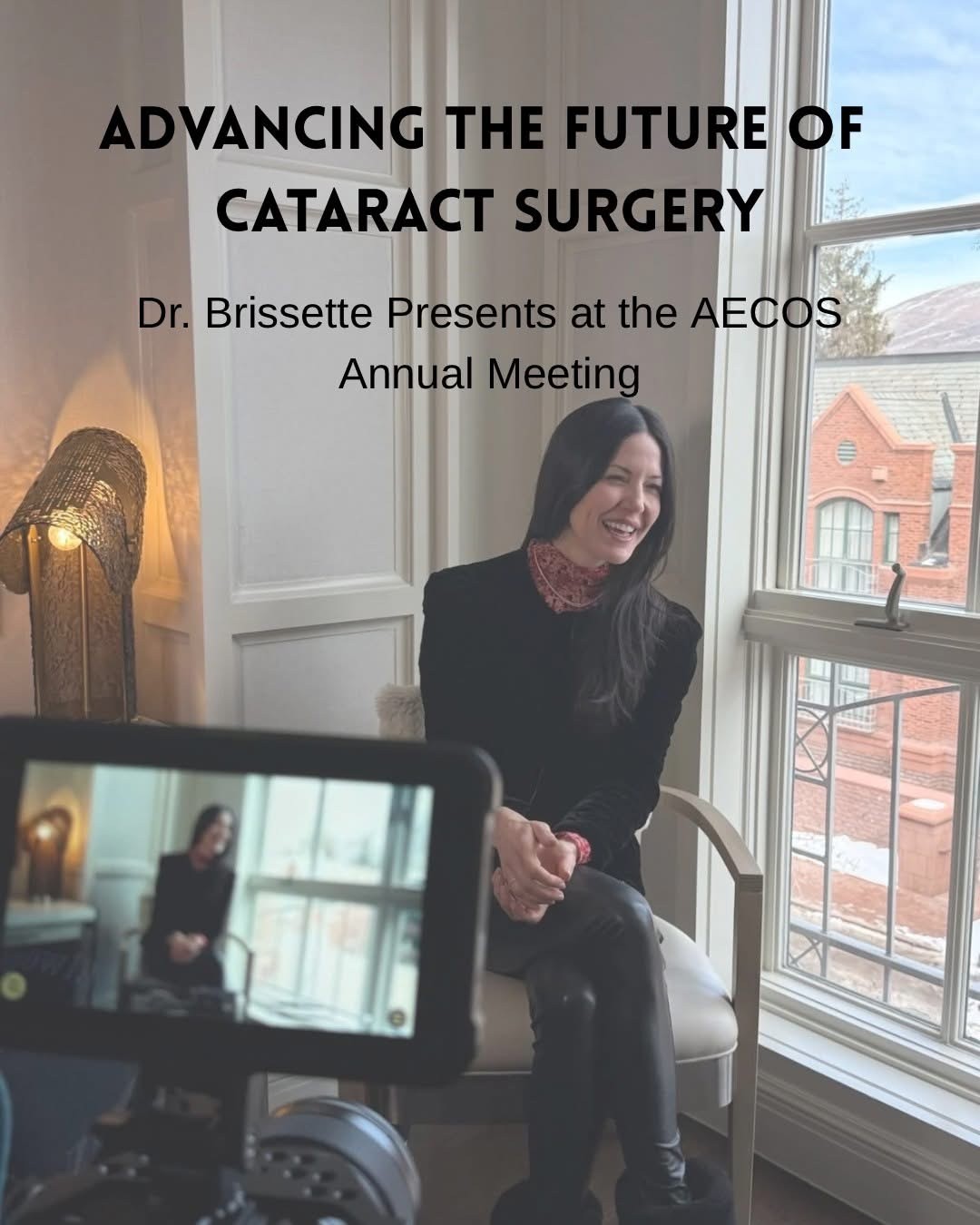
One of the most valuable lessons I’ve learned is the importance of separating, but also intermingling, my personal and professional online presence. Specifically, I maintain public social media accounts that blend my professional identity with elements of my everyday life: travel, conferences, family, and interests outside of medicine. In parallel, our practice maintains a dedicated website and corresponding social media accounts that are strictly education-focused. Patients want to see clinical competence and credibility, but they also want reassurance that there is a human being behind the white coat. Sharing some personal content provides that context without compromising the educational integrity of the practice’s digital content.
Creating Multiple Touchpoints
I’ve also found that staying active in adjacent spaces has become an important part of how patients discover and connect with my practice. My prior work with professional athletes (including vision screening for the New York Rangers) and my current role as “guiding ophthalmologist” for the skincare and makeup brand Clinique naturally lend themselves to shareable, educational content that resonates with “eye-curious” consumers. Similarly, my role as founder of Daily Practice by Dr. B. eyecare products offers yet another path to finding me on social media and perhaps following me to our practice website.
When these experiences are shared in short-form videos, posts, or interviews, they extend eye health conversations into potential patients’ everyday digital lives, reinforcing our credibility and familiarity across platforms. Over time, that visibility creates multiple touchpoints. So, by the time patients arrive for a consultation, they often feel they already understand both my approach and the broader scope of what our practice offers.
Social Media as a Teaching Tool
One of the greatest challenges in refractive practice is explaining why a particular procedure may or may not be right for a specific patient. This is where social media shines as a teaching tool. Take EVO ICL (Staar Surgical) as an example. Despite being FDA approved for several years and supported by robust long-term data, many patients have never heard of it. LASIK has near-universal name recognition; Evo ICL does not. When we began discussing EVO ICL online, we started with the basics: what it is, how it works, and how it differs from corneal-based procedures.
Importantly, the messaging never positioned EVO as better than laser vision correction. We present it as another option within a broad spectrum of refractive care. We openly discuss candidacy, benefits, trends in vision correction, and even potential risks and side effects. That transparency is critical. Keeping the content educational, rather than sales-driven, builds trust and ultimately leads to higher engagement.
Maximizing Value
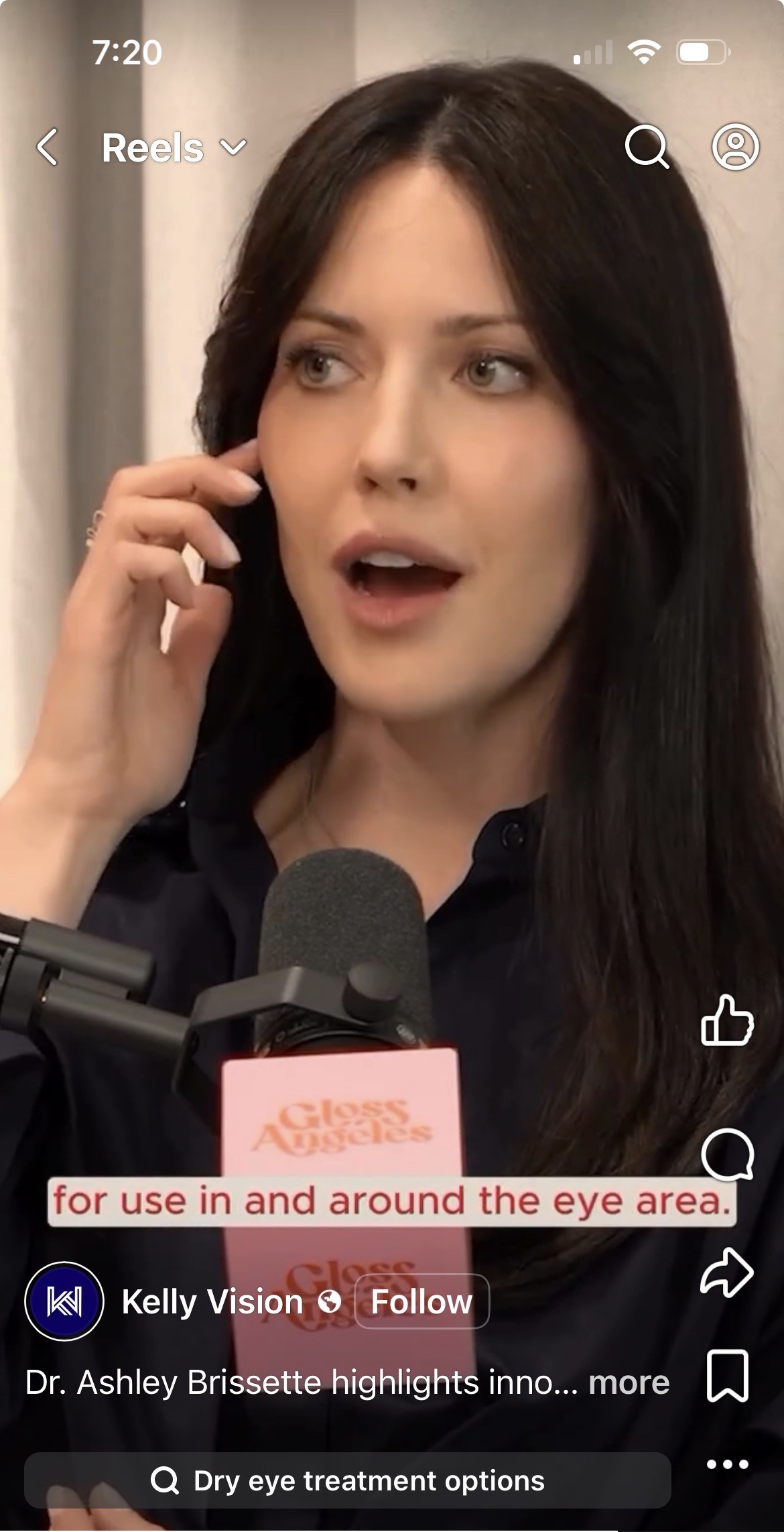
One of our most successful initiatives began with a single longform podcast episode focused on EVO ICL. The full episode was published on YouTube, providing depth for potential clients in search of comprehensive information. From there, the episode was segmented into short, 10-second to 32-second clips optimized for Instagram and TikTok.
This approach allowed us to maximize the value of a single piece of content across multiple platforms. Short clips introduced the topic and captured attention; the full episode provided nuance and context. High-performing clips were then repurposed as paid ads targeted to patients in the age range of 21 to 45 years old, with clear calls to action directing viewers to schedule a consultation.
Something that’s become increasingly clear throughout our social media journey is that refractive conversion is rarely a single-touch process. A patient might first encounter a short clip on TikTok, then watch a longer video on YouTube, and finally respond to an Instagram ad days or weeks later. Social media supports this multitouch journey in a way traditional marketing often cannot.
Education First, Conversion Second
It’s tempting to view social media strictly through the lens of lead generation. Although it can certainly serve that function, its greatest value lies in shaping expectations before a patient ever walks into the office.
When patients arrive already understanding that refractive surgery is not one-size-fits-all and that lens-based and corneal surgery options each play a role depending on their ocular anatomy and lifestyle, the consultation becomes far more productive. More time can be spent refining decisions because less time is needed to correct misconceptions. This paradigm has also helped us avoid mismatched expectations. Patients who engage with our social media content tend to self-select into the practice because our approach resonates with them.
Practice Identity and Positioning
At Kelly Vision, we consider ourselves a boutique practice with a focused scope: vision correction and dry eye care. Our refractive offerings include LASIK, EVO ICL, SMILE Pro (Zeiss), WaveLight Plus (Alcon), and premium cataract and refractive lens exchange procedures. This breadth allows us to develop truly customized care plans.
From a marketing perspective, offering a full refractive spectrum is powerful. However, even though a social media campaign highlighting a specific technology might draw a patient into the practice, they ultimately receive the intervention that is most appropriate for their age, refractive error, and ocular health. A patient in their 50s might present asking about EVO ICL only to be better served by refractive lens exchange. The messaging opens the door; the consultation determines the path forward.
Rethinking Digital Demographics
One persistent myth in ophthalmology marketing is that older patients do not engage digitally. In reality, patients across all age groups are increasingly using social media—as well as AI-driven tools—as search engines. It is common, for instance, for patients of all ages to search platforms like Instagram or TikTok for “EVO ICL New York” or “LASIK NYC,” or to ask large language models like ChatGPT for practice recommendations. Practices that maintain a consistent digital presence across the social media spectrum are better positioned to surface in these searches. Looking ahead, optimizing content not only for human viewers but also for AI-based discovery will become increasingly important.
Building the Right Team
None of this happens in a vacuum. A successful digital strategy requires a team. Our practice has a social media manager to coordinate posting; a videographer to capture and edit content; and marketing professionals to manage ad placement and analytics. For busy clinicians, outsourcing these functions is often the only realistic way to maintain consistency. The investment is real, but so is the return both in patient understanding and practice growth.
Just Do It
For many ophthalmologists, the biggest hurdle is simply getting started. Appearing on camera can feel uncomfortable for some. For practices hesitant to put physicians front and center on social media, this is not an all-or-nothing proposition. Educational content can feature staff, equipment, animations, or narrated visuals.
The key is recognizing that social media presence does not require gimmicks or performative behavior. Education-focused content, patient testimonials, or technology explanations can be just as effective and far more aligned with many physicians’ personal styles. Like any skill, digital communication improves with practice. The more authentically it reflects who you are and how you practice, the more effective it becomes.
Sustainable Growth
Social media is no longer optional for refractive practices aiming to grow consistently and sustainably. When used as an extension of patient education rather than as a replacement for it, digital platforms can reinforce individualized care, introduce evolving technologies in a balanced way, and support meaningful patient engagement long before the first consultation.
