




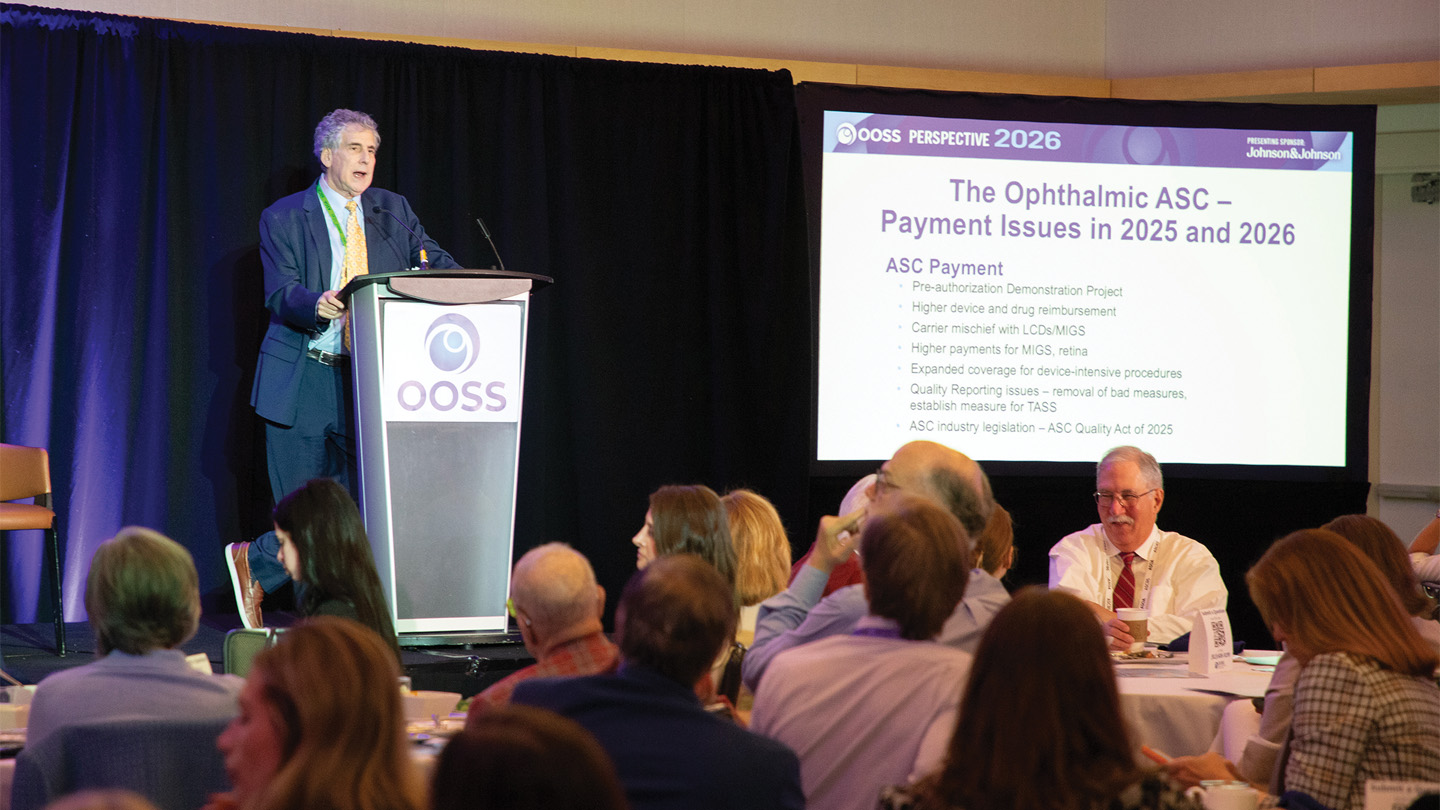
At the Outpatient Ophthalmic Surgery Society’s “OOSS Perspective 2026” symposium in Washington, DC, last month, the organization's Washington counsel, Michael Romansky, JD, delivered an update on reimbursement, regulatory developments, and advocacy priorities affecting ophthalmic ambulatory surgery centers (ASCs).
Romansky identified payment policy as a primary concern, pointing to recent engagement with the Centers for Medicare & Medicaid Services (CMS). He noted that CMS initially proposed a 4.7% reduction in ASC payments for 2026, prompting a coordinated response from ophthalmology organizations and ASC stakeholders. Following public comment and supporting analysis, the final rule instead resulted in a 3.4% increase. Romansky emphasized the financial impact of that change, stating that it translated into approximately $150 million for ASCs performing cataract surgery. “It also demonstrates that advocacy really does work,” he said, urging continued participation.
He also reviewed the status of the annual cost-of-living update for ASCs. After many years of lobbying, CMS agreed to conduct a pilot program in 2019 under which ASCs would receive the same update as hospitals (the Hospital Market Basket) rather than the typically lower Consumer Price Index-Urban. For 2027, CMS will make a final determination regarding which update factor is appropriate for ASCs. The community will strongly recommend that the agency retain the Hospital Market Basket to update ASC rates going forward.
Several years ago, Congress mandated that CMS pay separately (and above the facility fee) for non-opioid drugs that are used during surgery and have FDA-approved indications for pain relief. OOSS believes the definition of products eligible for separate payment is too narrow. Romansky said efforts are underway to advocate for a broader interpretation to include inflammation, a precursor to pain.
Romansky highlighted several compliance-related issues for ASC operators. Referencing a CMS prior-authorization demonstration project across 10 states over 5 years, he advised affected facilities to participate or risk non-payment for failure to comply. He also discussed the Out-patient and Ambulatory Surgery Consumer Assessment of Healthcare Providers and Systems patient satisfaction survey, noting that some facilities have not yet contracted with an approved vendor and warning that CMS has the authority to impose penalties for noncompliance.
Romansky stated that OOSS is concerned that Medicare contractors have significant authority to limit payments for vital eyecare services. In 2024, the carriers adopted a policy significantly limiting payment for MIGS combination procedures. While the ophthalmology community persuaded the contractors to restore payment for these services, Romansky emphasized that such restrictions will likely re-emerge in the future and that all stakeholders must be vigilant in monitoring and responding to these endeavors.
Romansky also observed that while more ASCs are performing retina procedures, existing access to hospitals and ASCs is not sufficient to address the demand for retinal surgical care. OOSS will seek enhanced reimbursement for retina cases.
On the legislative front, he discussed introduction of the Outpatient Surgery Access Act of 2026, describing provisions that would address payment updates and other longstanding reimbursement concerns. He encouraged attendees to use the available OOSS advocacy tools to contact legislators and ask them to cosponsor the bill.
Romansky also revisited ongoing patient health and safety and Medicare concerns related to office-based surgery, emphasizing that payment under Part B for office-based cataract surgery should not be provided unless and until physician offices meet standards comparable to those applied to ASCs.
He concluded by underscoring the importance of member engagement in advocacy efforts. “We must always strive to improve our grassroots lobbying efforts,” he said, noting that August is ASC Visitation Month and OOSS will be asking members to invite their legislators to their facilities. “Nothing sells the ASC product like visualizing a facility and the surgical procedures performed. We often take this experience we live through every day for granted, but cataract and other eye surgeries are a miracle to observe,” he said.
“Political action: It’s not a dirty word. It’s necessary,” Romansky concluded. “The Outpatient Ophthalmic Surgery Political Action Committee is the only PAC that represents the interests of the patient, the ophthalmic surgeon, and the facility. It is important to maintain access to policymakers in the nation’s capital.” Romansky urged OOSS members to contribute. OASC
