





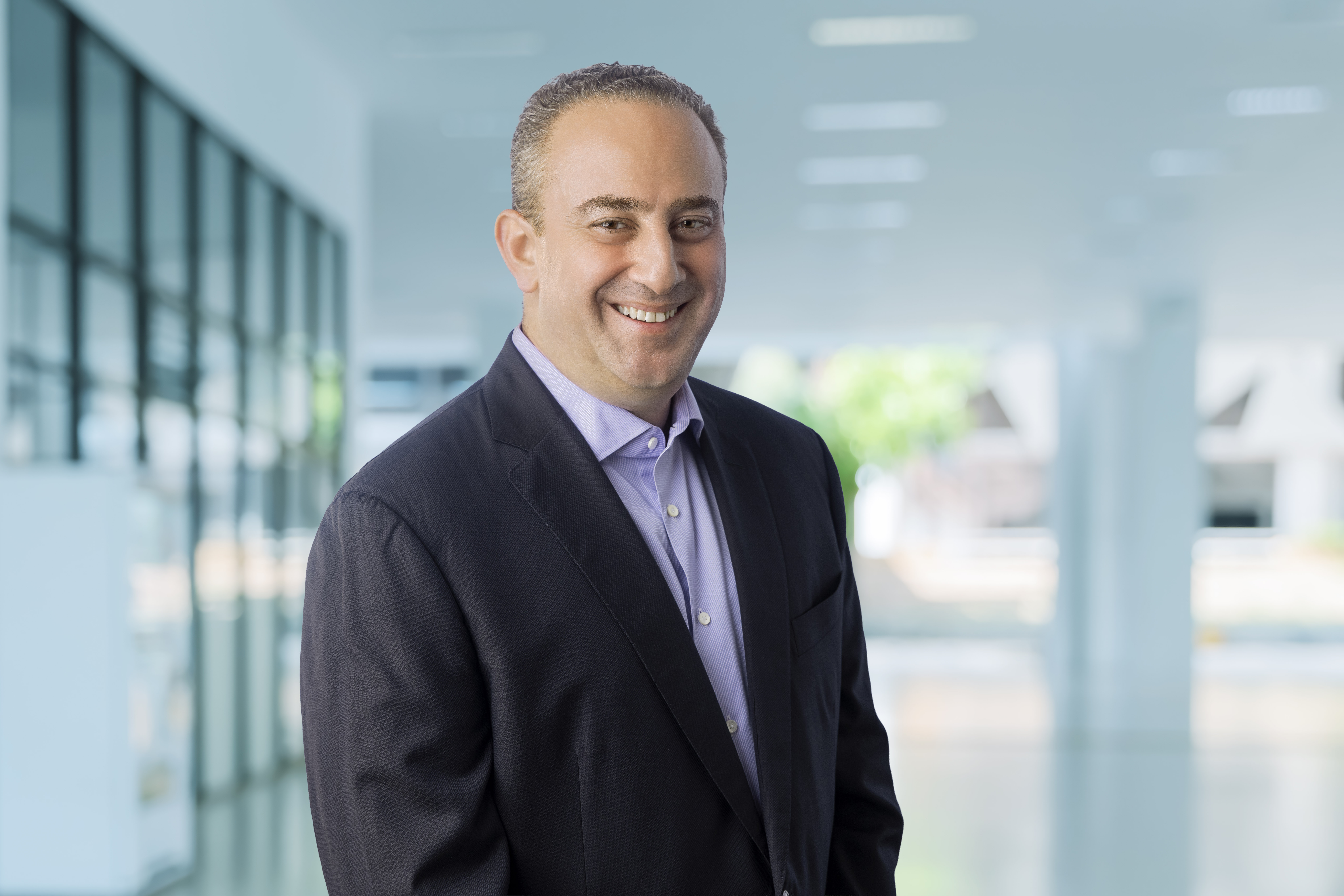
The Ophthalmic ASC recently spoke with Daniel Eisenstadt, founder and chief executive officer of Terramed Real Estate Solutions in Bala Cynwyd, Pennsylvania. He shared trends in ambulatory surgery center (ASC) ophthalmic procedure volume, factors that contribute to limited surgical capacity, how these capacity constraints affect day-to-day ASC operations, and more.
The Ophthalmic ASC: Ophthalmic ASCs frequently report rising surgical demand. From your view, working with practices nationwide, what is driving this increase in ophthalmic procedure volume?
Daniel Eisenstadt: The primary driver of rising ophthalmic surgical demand is demographics. As people age, cataracts become more common. At the same time, more procedures are being performed in ASCs instead of hospitals because they offer predictable scheduling, lower costs, and an efficient outpatient setting. We’re also seeing technology expand the number of patients choosing surgery. Advances in lens implants and glaucoma procedures are improving outcomes and broadening treatment options, which is contributing to steady growth in surgical volume for many ophthalmology practices.
OASC: Despite growing demand, practices might feel their surgical capacity is limited. What are the contributing factors to this bottleneck in ophthalmic ASCs today?
DE: Many ophthalmic ASCs were built years ago, when surgical volumes were lower. As groups grow and hire more surgeons, those facilities may not have enough operating rooms, prep areas, or recovery space to handle additional cases. High-volume surgeons may need 2 operating rooms working at once, with proper nurse staffing and coverage. Even small delays can reduce case volume, and the facility itself becomes the bottleneck. As an ophthalmologist friend of mine says, “Be fast between steps but not during.” Never rush surgery. However, efficiency requires multiple surgery suites and adequate preoperative and postoperative spaces to increase speed between surgeries.
OASC: How do these capacity constraints affect day-to-day ASC operations, such as scheduling efficiency, patient access, and surgeon productivity?
DE: When an ASC reaches its limits, the operational effects appear quickly. Schedules become harder to adjust, with fewer operating room blocks and less flexibility to accommodate urgent cases, leading to longer wait times. Because many ophthalmic procedures are short and occur in high volume, small delays ripple through the entire practice. Over time, those constraints can slow growth and create pressure to expand surgical capacity. Another issue can be the shortage of anesthesiologists, which can create scheduling issues and other inefficiency.
OASC: What infrastructure limitations in existing ASCs most often prevent practices from expanding surgical throughput or adding new services?
DE: Operating room capacity is the most common limitation. We’re seeing that many ophthalmic surgery centers were designed with 1 operating room, and as practices expand their staff or services, that becomes a barrier to growth. Prep and recovery areas can also become constrained if the facility was not designed for higher patient capacity. Another issue is space for modern equipment.
OASC: ASCs are rapidly adopting new technologies, including premium IOL platforms. How do these innovations influence facility design and surgical capacity planning?
DE: The pace of innovation in cataract surgery and vision correction has been extremely rapid. New imaging systems, premium intraocular lenses, and minimally invasive glaucoma procedures require both capital investment and dedicated, physical space. As a result, practices are thinking strategically about how their facilities are configured and if there’s room for expansion. Designing surgery centers with flexibility for future equipment and procedural advances is an important part of long-term planning. Some ophthalmologists can be recruited to an ASC because it has the latest equipment. Further, some argue that the doctors who like the latest equipment tend to also be the most efficient.
OASC: Are there particular geographic areas or demographic trends where the gap between surgical demand and available ASC capacity is especially challenging, and can you describe what the reasons might be?
DE: We’re seeing particularly high demand for cataract surgery in the sunbelt and other popular retirement destinations, driven by the area’s aging population. Rapidly growing suburban areas can face similar challenges if surgical infrastructure has not kept pace, and in those situations, existing ASCs may be operating at full capacity. As patient demand continues to increase, new development or relocation is needed to maintain access to care.
OASC: When a practice recognizes it is reaching its surgical capacity limits, what operational or physical options should it consider to address the issue?
DE: Terramed usually advises its owner-and-operator partners to evaluate operational efficiency. Improvements in scheduling, staffing, and patient flow can sometimes help existing facilities create incremental capacity. However, when surgical demand grows exponentially, practices often need to consider physical solutions. That might include adding operating rooms and expanding waiting areas or parking spaces.
OASC: What factors should practice leaders consider when deciding whether to renovate an existing ASC, expand capacity, or pursue a new facility?
DE: The decision typically starts with evaluating the physical constraints of the existing facility, along with the practice’s access to capital and available medical real estate options. Renovation can work if the existing building has enough space and the layout supports higher surgical volume. If the facility footprint simply cannot accommodate additional infrastructure or equipment, building a new ASC—either ground-up or through adaptive reuse—may be the better long-term option. Capital and inventory availability, regulatory requirements, and physician alignment all factor into the decision.
OASC: How should ASC capacity planning fit into broader strategic decisions for ophthalmology groups, such as recruiting new surgeons, adding subspecialty services, or expanding into new markets?
DE: We’re seeing many ophthalmology groups evaluate their needs earlier in the planning process, since broader decisions—such as recruiting new surgeons, adding subspecialty services, or expanding into new markets—depend on it. If the clinical side of a practice grows, but the ASC cannot accommodate additional cases, long-term expansion plans can stall.
OASC: As demand for ophthalmic procedures continues to rise, how do you expect ASC infrastructure and facility strategy to evolve over the next decade? How will AI fit into addressing these challenges?
DE: Demand for ophthalmic procedures will likely continue to increase, and many practices will look to invest in modern outpatient surgical facilities, especially as technology improves. Artificial intelligence (AI) could be a game changer by taking administrative tasks like scheduling and patient flow off their plates. Further, AI may be used to aid nurses with pre-ops on patients as well as with pre-op patient reminders.
OASC: Anything else that ASC owners should know?
DE: One issue that is often overlooked is how closely infrastructure affects patient access. Cataract surgery is already one of the most common procedures performed in ASCs, and demand is going to grow. Practices that evaluate their facility needs early will be better positioned, and ensuring it has proper capacity will reduce operational bottlenecks, allowing surgeons to treat more patients efficiently. OASC